
Understanding Pugs: What Every Pet Owner Should Know
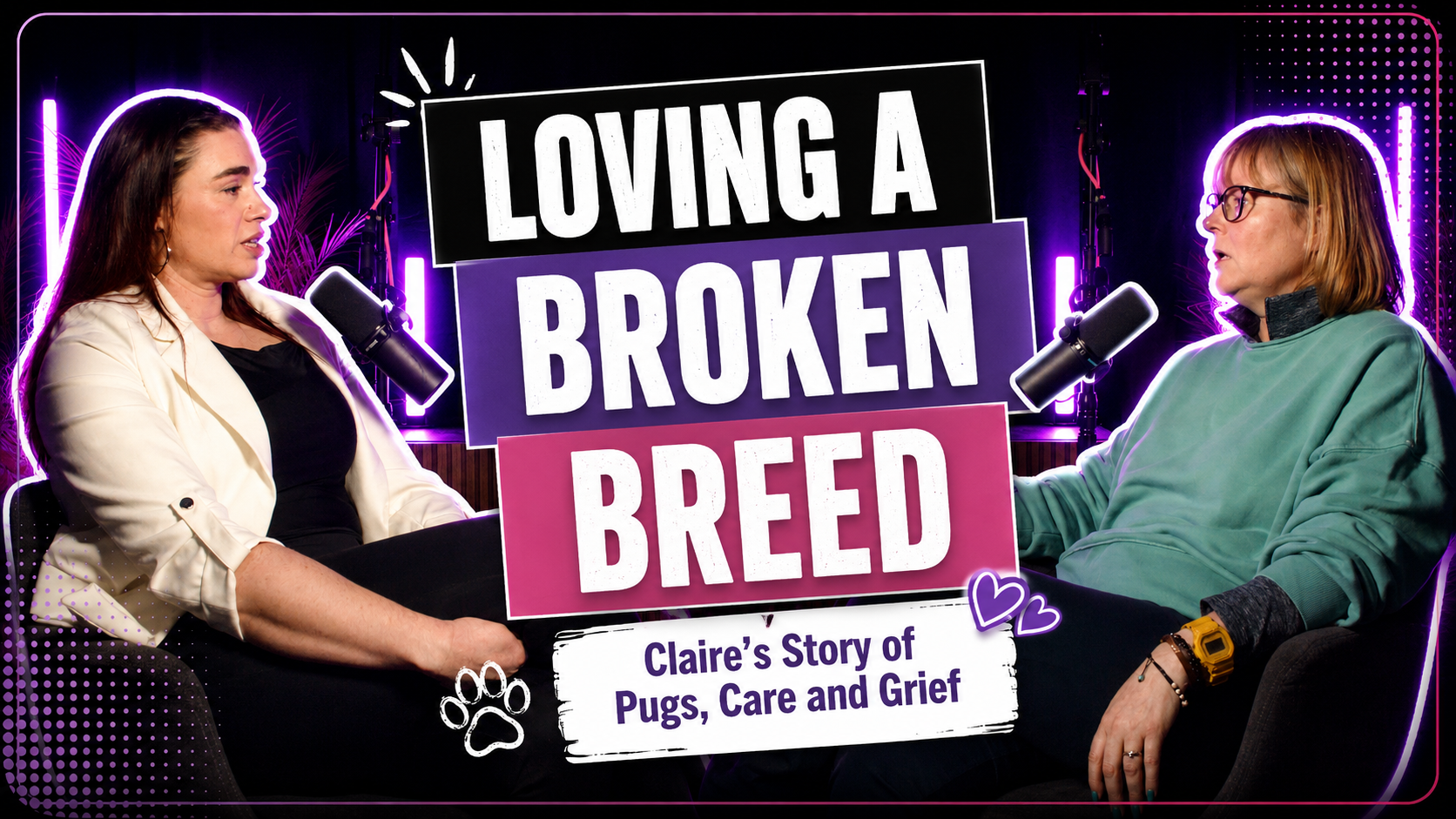
Episode 3 of Under the Fur | Vanessa & Claire
Pugs are easy to fall in love with.
They are funny, affectionate, full of personality and often completely devoted to their people. But behind the charm, the snoring and the squishy faces, pugs are also a breed with very real health challenges.
In this episode of Under the Fur, Vanessa speaks with Claire about life with pugs, the love they bring, and the emotional weight that can come with caring for a breed that is not always built for an easy life.
The Reality of Loving Pugs
Pugs are often described as little shadows. They want to be near you, involved in everything, and loved loudly.
That bond is what makes them so special.
But it is also what makes it so hard when their health starts to decline. Many pug owners know the feeling of constantly watching their breathing, their weight, their skin, their eyes and their comfort.
Owning a pug is not just about loving the cute parts. It is also about understanding the difficult parts.
Common Health Problems in Pugs
Pugs are a brachycephalic breed, meaning they have a flat face and short nose. While this gives them their recognisable look, it can also make breathing harder.
Some pugs may snore, breathe noisily, struggle in warm weather or tire quickly on walks. Heat can be especially dangerous for them, so owners need to be careful with exercise, temperature and stress.
Pugs can also be prone to skin fold infections, eye problems, joint issues and weight gain. Even a small amount of extra weight can make breathing and movement more difficult.
This does not mean every pug will suffer badly, but it does mean owners need to be prepared.
When Love Means Making Hard Decisions
One of the hardest parts of caring for any pet is knowing when they are no longer comfortable.
With pugs, this can feel especially complicated. Because some breathing noises or physical struggles are often seen as “normal for the breed,” it can be difficult to know when things have gone too far.
That is why honest conversations with your vet matter.
Sometimes love means treatment.
Sometimes love means managing symptoms.
And sometimes love means asking the heartbreaking question: Are they still enjoying life?
These decisions are never easy, and they should never be made alone.
What Pug Owners Can Do
The best thing pug owners can do is be proactive.
Keep your pug at a healthy weight, avoid overheating, clean their skin folds regularly, monitor their eyes, and speak to your vet if you notice changes in breathing, energy, appetite or behaviour.
Regular vet checks can make a big difference, especially when problems are spotted early.
It is also important to choose breeders and rescues carefully, ask questions, and understand the responsibility that comes with the breed.
Pugs can bring so much joy, but they need owners who are prepared for more than just the adorable side.
Final Thoughts
Claire’s story is a reminder that loving a pug can be beautiful, funny, intense and heartbreaking all at once.
They may be a “broken breed” in many ways, but the love people have for them is very real.
The goal is not to shame pug owners. It is to help them feel informed, supported and prepared.
Because when we understand their needs better, we can love them better too.
FAQ’S
-
Pugs can live happy lives, but they are prone to breathing issues, skin fold problems, eye conditions, weight gain and joint problems.
-
Pugs are flat-faced dogs, which means their airways can be narrower and less efficient. This can make breathing harder, especially in heat or during exercise.
-
Keep them lean, avoid hot weather, clean their folds, monitor their breathing and have regular vet checks.
-
Pugs can be wonderful companions, but they need owners who understand their health risks and are prepared for ongoing care.
